A branch on the ground can become a tiny ecosystem, harbouring a quiet form of life that isn’t always noticeable at first glance.
Giving cut branches a new lease of life
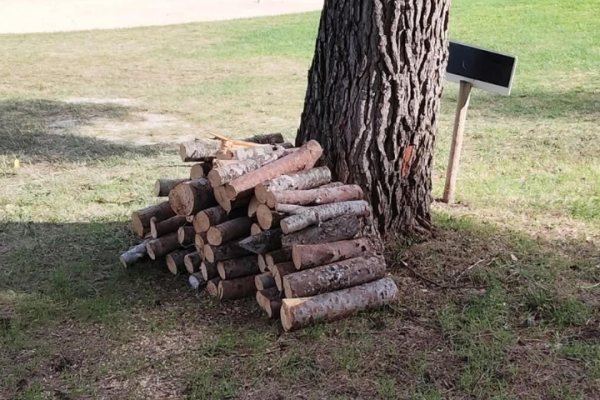
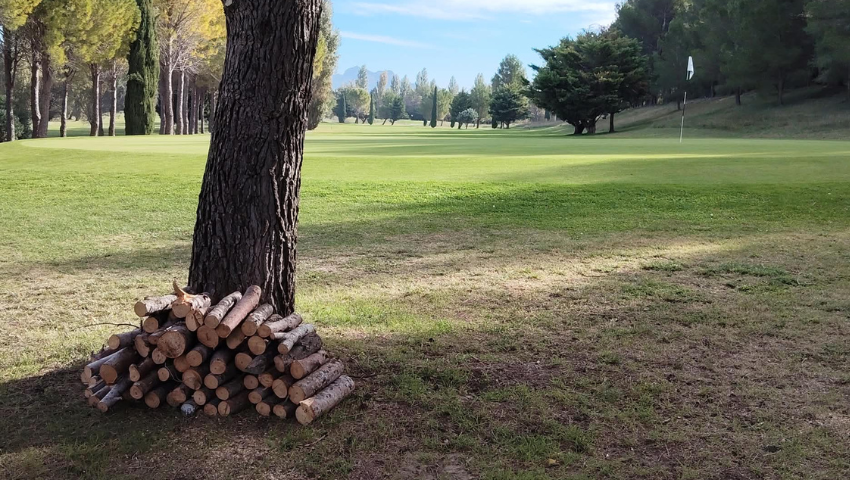
Following the pruning work carried out near the 16th green and the 17th tee, the cut wood was left at the foot of the trees. This practice allows some of the plant material to be kept on site and integrated into the course’s environment.
Dead wood: a natural habitat
Dead wood plays an important role in ecosystems. As it gradually decomposes, it provides a habitat and a source of food for many organisms: insects, larvae, fungi and micro-organisms.
Certain insects, known as saproxylic insects, depend on dead or decaying wood for food, development or shelter. Although they may be inconspicuous, these species contribute to the richness of local biodiversity.
A resource for the soil and the life of the course
A resource for the soil and wildlife on the course: Over time, the decomposition of wood returns nutrients to the soil and contributes to the natural cycle of matter. Branches left at the foot of trees also create microhabitats that are beneficial to a variety of organisms.
Maintaining the course whilst respecting the natural environment
Golf course maintenance must strike a balance between player safety, the quality of play and the preservation of the natural environment. Where conditions allow, leaving felled timber in suitable areas is a practical way of promoting biodiversity.
At the Servanes Golf Club in Mouriès, in the heart of the Alpilles, every intervention on the course is also an opportunity to gain a better understanding of nature’s place in the landscape we share.